随着欧元区全球排放法规收紧 6 前往国六, 不起眼的柴油颗粒过滤器已成为现代车辆设计中最关键的组件之一. 其核心在于单一材料,使这一切成为可能: 碳化硅 (碳化硅) — 一种具有非凡耐热性的陶瓷, 机械耐久性, 和过滤效率是其他材料无法比拟的.
什么是柴油机颗粒过滤器 - 以及为什么材料很重要?
A 柴油颗粒过滤器 是一种排气后处理装置,旨在捕获和氧化柴油燃烧过程中产生的碳质烟灰颗粒. 不带 DPF, 这些细颗粒物——下面有很多 2.5 微米——进入大气并导致呼吸道疾病, 烟雾, 和监管不合规情况.
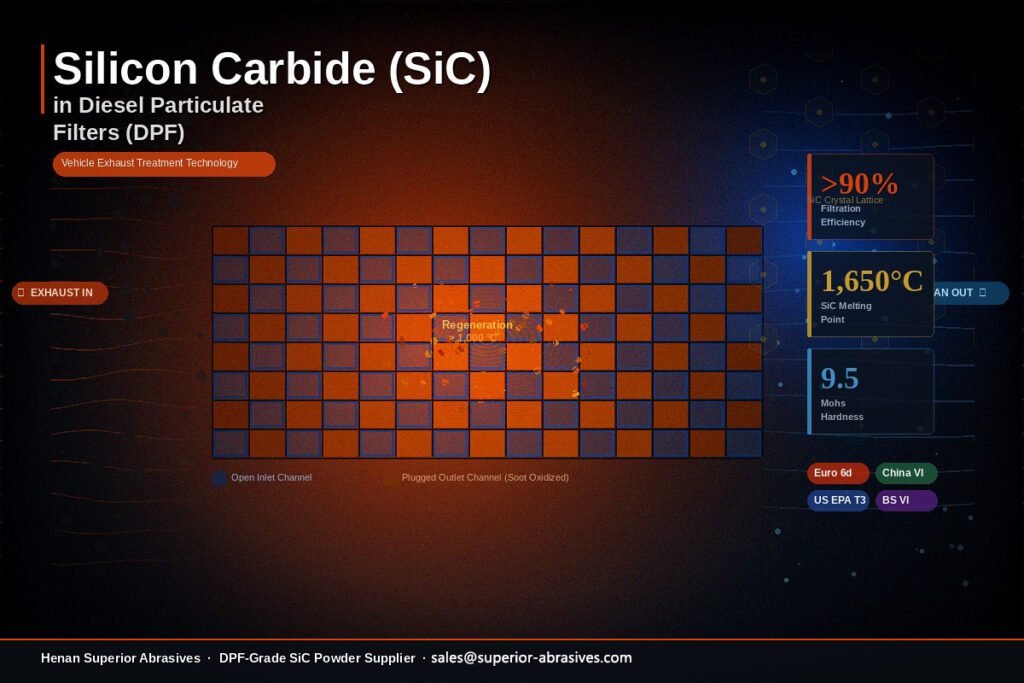
DPF 在极端环境下运行: 废气温度通常可达 600–900°C, 在主动再生过程中(清除积聚烟灰的高温燃烧循环),过滤器内的温度可能会飙升至 1,000°C 以上. 基材材料不仅必须能够承受这些条件,而且必须保持尺寸稳定性, 过滤完整性, 和循环后的低背压, 为了车辆的使用寿命.
这正是碳化硅出现的原因,也是它现在在全球乘用车和轻型 DPF 基材市场占据主导地位的原因.
SiC 在 DPF 领域占据主导地位背后的材料科学
碳化硅 是硅和碳的共价键化合物 (碳化硅) 形成具有异常刚性的晶格. 它在 DPF 基材中的应用并非偶然 - 这是其独特的性能融合的结果,这些性能与排气后处理的需求精确匹配.
热性能: 在再生周期中生存
再生事件是 DPF 运行中对热量要求最高的时刻. 累积的烟灰在超过 550°C 的温度下被烧掉, 以及在不受控制的再生事件中, 本地化的 “热失控” 可使温度远高于 1,000°C. 大多数堇青石基材(SiC 的主要竞争对手)在 1,200°C 以上开始软化和变形.
- 熔点 ~1,650°C: SiC 提供了高于使用中遇到的最高再生温度的显着安全裕度.
- 导热系数120–170 W/m·K: SiC 在基板上快速均匀地散热, 防止危险热点的形成.
- 热膨胀系数低 (4.0 × 10⁻⁶/°C): 基材可预测地膨胀和收缩,在数千次热循环中不会破裂或分层.
- 高比热容: SiC 以受控方式吸收和释放热量, 在负载快速变化期间稳定温度.
机械强度: 承受道路振动和压力
安装在车辆下方的 DPF 会受到持续的机械振动, 排气压力脉冲, 和不断增加的压力. SiC 陶瓷的弯曲强度为 300–500 MPa, 明显高于堇青石, 允许制造商在不牺牲结构完整性的情况下生产更薄壁的蜂窝结构. 壁越薄意味着发动机的背压越低, 这直接转化为燃油效率和功率输出.
耐化学性: 在废气环境中生存
柴油机尾气中含有硫化合物, 碳氢化合物, 氮氧化物, 和水蒸气——高温下具有化学腐蚀性的混合物. SiC 出色的抗氧化性源于其表面形成的钝化 SiO2 钝化层, 保护散装材料免遭进一步氧化. 这种自我保护行为对于在恶劣的发动机罩下环境中延长使用寿命至关重要.
技术说明: SiC相对于堇青石的导热性能优势 (大约高 10–15 倍) 这就是 SiC DPF 能够更快地达到再生温度并更均匀地冷却的原因——这是减少热应力和延长基材使用寿命的关键因素.
SiC DPF 基板是如何制造的
SiC DPF 基板的生产是一个精密陶瓷制造过程,首先要保证 SiC 原材料粉末的质量. 了解此过程有助于买家和工程师从一开始就指定正确的材料等级.
步 1 — 原材料选择
高纯α-SiC粉末 (碳化硅含量≥99%) 被选为基础材料. 粒度分布受到严格控制 - 通常 D50 值在 10–50 µm 范围内 - 因为粒度直接影响孔隙率, 渗透性, 和成品基材的壁强度.
步 2 — 塑化和挤出
SiC粉末与有机粘合剂混合, 造孔剂, 和增塑剂, 然后通过精密模具挤压形成特有的蜂窝通道结构. 细胞密度通常为每平方英寸 200–300 个细胞 (消费者安全标准) 用于汽车 DPF 应用.
步 3 — 干燥和烧结
挤压和通道端部封堵后 (交替通道被堵塞,迫使废气通过多孔壁), 将生坯干燥,然后在受控气氛中在 2,000–2,200°C 的温度下进行烧结. 此步骤使 SiC 骨架致密化, 烧掉有机粘合剂, 并建立最终的孔隙结构.
步 4 — 催化剂涂层 (选修的)
对于SCRF (选择性催化还原过滤器) 应用程序, 含有铂族金属的催化剂涂层 (铂族金属) 或贱金属氧化物应用于内部通道壁, 在过滤烟尘的同时转化 NOₓ 气体.
碳化硅与. 堇青石: DPF基材材质比较
| 财产 | 碳化硅 (碳化硅) | 堇青石 |
|---|---|---|
| 最高使用温度 | ~1,400°C 连续 | 〜1,200°C (上面变软) |
| 导热系数 | 120–170 W/m·K | 1.5–3.0 W/m·K |
| 热膨胀系数 | 4.0 × 10⁻⁶/°C | 1.0–2.0 × 10⁻⁶/°C |
| 弯曲强度 | 300–500兆帕 | 150–200兆帕 |
| 密度 | 〜3.1克/立方厘米 | 〜2.1克/立方厘米 |
| 主要 DPF 应用 | 乘用车, 轻型卡车 | 重型卡车, 仅 SCR |
| 再生耐受性 | 出色的 | 缓和 |
| 相对成本 | 更高 | 降低 |
监管驱动因素: 为什么 SiC DPF 需求正在加速
全球范围内向更严格的颗粒物排放标准的转变是采用 SiC DPF 的最强大的推动力. 每一个后续法规都对颗粒数量施加了更严格的限制 (PN) 和颗粒质量 (下午), 需要更高性能的基材.
需要 DPF 技术的主要排放标准
- 欧元 6d (欧洲): 要求PN≤ 6 × 10¹¹ 轻型柴油车颗粒物/公里 — 有效地要求在欧洲销售的每辆柴油车都配备高效 DPF.
- 国六 (中国): 直接相当于欧元6d; 7月起对轻型车实施 2020, 7 月起适用于重型车辆 2021.
- 美国 EPA 层级 3 / 加州 LEV III: 适用于所有轻型车辆的严格 PM 标准, 推动 DPF 的采用,甚至在汽油颗粒过滤器中也是如此 (GPF) SiC 正在获得份额的应用.
- BS VI (印度): 从 BS IV 直接跃升至 BS VI 2020, 全球最大的汽车市场之一对配备 DPF 的柴油动力系统产生了巨大的夜间需求.
市场洞察: 全球 DPF 市场预计将大幅增长 2030 随着新兴市场实施欧 6 等效标准. SiC 基板需求直接相关 - SiC DPF 采购周期通常为 18-36 个月,从原材料规格到车辆集成.
为 DPF 应用指定 SiC: 买家必须知道什么
对于陶瓷基板制造商, 催化剂涂层机, 和一级汽车供应商采购碳化硅粉末用于 DPF 生产, 材料规格并非商品决定. 以下参数至关重要:
纯度和相组成
DPF 级 SiC 应为 α 相 (6H或4H多型体) 碳化硅的最低纯度为 98.5–99.5%. 游离硅含量必须最小化,因为它会优先氧化并会破坏烧结. 必须控制铁和其他金属杂质,以避免可能改变再生行为的催化活性.
粒度分布 (PSD)
输入粉末的 PSD 直接控制烧结基材的孔径分布, 这反过来又控制过滤效率和压降. 供应商必须提供完整的 D10/D50/D90 数据, 不仅仅是一个中值. 有时指定双峰分布以优化烧结前生坯的堆积密度.
形态和表面积
片状 SiC 颗粒是 DPF 应用的首选,因为与等轴形态相比,它们具有更高的生坯密度并产生更强的烧结颈. 比表面积 (赌注) DPF 级粉末的典型值为 1–5 m²/g.
批次间的一致性
汽车供应链需要非凡的一致性. 碳化硅粉末批次必须携带完整的分析证书 (辅酶A) 具有可溯源校准功能, 供应商应能够证明统计过程控制 (程控) 跨生产批次的数据. D90 尾部值的偏差甚至 5-10% 都会在整个生产过程中产生不可接受的基材背压变化.
经常问的问题
问: 为什么DPF采用碳化硅而不是其他陶瓷材料?
SiC 提供最佳的导热性组合, 高温强度, DPF 应用的耐化学性. 其导热率比堇青石大约高 50-100 倍,可实现更快的速度, 更均匀的再生,同时最大限度地减少危险的热梯度. 没有其他经济实惠的陶瓷材料可以与乘用车 DPF 使用案例的这种特性组合相媲美.
问: DPF粉用α-SiC和β-SiC有什么区别?
阿尔法碳化硅 (六方晶体结构, 6H/4H多型体) 是 DPF 基材制造的首选形式,因为它在 2,000°C 以上具有热力学稳定性,并且可以烧结到更高的密度. β-碳化硅 (立方体, 3C多型体) 在烧结温度下稳定性较差,并且在加工过程中可能发生相变, 这可能会引入微观结构缺陷. DPF 级 SiC 粉末规格通常要求 α-SiC 的 β-SiC 含量低于 5%.
问: DPF 再生如何工作以及 SiC 如何实现它?
当烟灰积聚在 DPF 壁上时, 发动机背压增加. 在触发阈值, 发动机管理系统启动再生——或者被动 (利用高负载运行产生的废热) 或活跃 (喷射燃烧后燃料以提高排气温度). SiC的高导热性确保整个基材达到烟灰燃烧温度 (〜550–650°C) 快速而均匀地, 防止局部过热事件导致劣质基材破裂或熔化.
问: SiC DPF 也可以用于汽油发动机吗?
是的. 汽油颗粒过滤器 (GPF) 用于汽油直喷 (GDI) 欧 6d 和国 VI 法规对发动机的要求越来越高. SiC GPF 遵循与柴油 DPF 类似的设计原理, 尽管 GDI 发动机中较低的烟灰负载率意味着更薄的壁和更低的单元密度通常是可以接受的. SiC 的热稳定性仍然是 GPF 应用的关键优势, 排气温度可能短暂超过柴油机运行时遇到的温度.
问: 使用什么尺寸的 SiC 颗粒来制造 DPF 基板?
DPF 基材制造商通常在主批次中使用 D50 值在 10–50 µm 范围内的 SiC 粉末, 通常与更细的部分结合 (D50 为 1–5 µm) 填充生坯中的颗粒间空隙. 由此产生的烧结基材的平均孔径为 10–20 µm——大到足以防止压降过大,同时小到足以有效捕获亚微米烟灰颗粒.
问: 如何获得 DPF 制造新 SiC 粉末供应商的资格?
健全的供应商资格认证流程应包括: (1) 使用 ICP-OES 对痕量金属进行全面化学分析, (2) XRD 物相分析确认 α-SiC 含量和 β-SiC 定量, (3) 激光衍射 PSD,具有 D10/D50/D90 至少 10 连续生产批次, (4) BET 表面积和 SEM 形貌表征, 和 (5) 比较基材孔隙率的试点烧结试验, 铁道部 (断裂模量), 和孔径分布与您当前合格的供应商的比较. 请求 IATF 16949 汽车级供应链的认证证据.
为 DPF 制造采购高纯度 SiC 粉末
河南优之源磨料 (高铁) 供应 FEPA- 以及为陶瓷基板制造商提供 ISO 认证的碳化硅粉末, 催化剂涂层机, 以及全球汽车一级供应商. 我们的 DPF 级 SiC 可提供纯度, PSD一致性, 和您的生产所需的相位控制.
α-SiC ≥99.0%, 每批次均具有完整的 ICP-OES 微量金属认证.
每个生产批次均采用 SPC 监控的 PSD,具有 D10/D50/D90 CoA.
定制粒径范围为 D50 = 1 微米至 50 微米; 提供双峰共混物.
服务 60+ 具有可靠交货时间和专门技术支持的国家.