Czarny krzemowa węglika (Czarny SiC) stał się jednym z najbardziej zaufanych mediów ściernych w przemysłowym przygotowaniu powierzchni stali — łącząc wyjątkową twardość, ostra geometria kątowa, i opłacalność w jednym materiale. W tym artykule zbadano, jak Black SiC sprawdza się w operacjach czyszczenia strumieniowo-ściernego, jakie międzynarodowe standardy regulują jego użycie, i jak wybrać odpowiednią klasę do swojego zastosowania.
Co to jest czarny węglik krzemu?
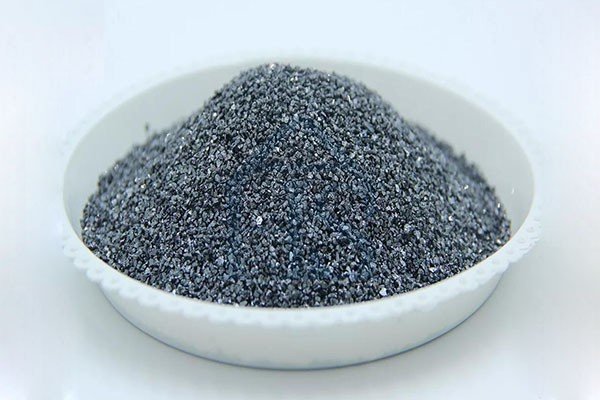
Czarny krzemowa węglika (wzór chemiczny SiC) wytwarzany jest poprzez stapianie wysokiej czystości piasku krzemionkowego i koksu naftowego w elektrycznym piecu oporowym w temperaturach przekraczających 2,200 °C – proces znany jako metoda Achesona. Powstały kryształ ustępuje pod względem twardości jedynie diamentowi i sześciennemu azotkowi boru, ocena 9,1–9,5 w skali Mohsa. Jest ciemno, lśniący kolor pochodzi z pozostałości zanieczyszczeń żelazem i węglem, które zmniejszają czystość do typowo 95–98% SiC (w porównaniu do 99%+ Do Zielony SiC), ale to sprawia, że Black SiC jest znacznie bardziej ekonomiczny, bez pogarszania wydajności obróbki strumieniowo-ściernej.
Pod wpływem uderzenia materiał pęka konchoidalnie, stale eksponując świeżość, ostre jak brzytwa krawędzie tnące — właściwość kluczowa dla jego skuteczności jako ścierniwa. Tam, gdzie zaokrąglone materiały ścierne, takie jak śrut stalowy, powodują śrutowanie, profil ściskający, Czarny SiC generuje głęboko kanciasty, profil powierzchni z wzorem kotwicy, który radykalnie poprawia przyczepność powłoki.
Dlaczego Black SiC wyróżnia się w obróbce strumieniowo-ściernej stali
Przygotowanie powierzchni stali nie polega jedynie na usunięciu rdzy lub zgorzeliny walcowniczej — chodzi o zaprojektowanie określonego profilu powierzchni i poziomu czystości, który zapewni, że systemy powłokowe będą prawidłowo przylegać i działać przez cały zamierzony okres użytkowania. Black SiC działa na wielu frontach:
1. Doskonała agresywność cięcia
Kątowy, rozszczepiona morfologia cząstek czarnego SiC powoduje agresywne skrawanie stali. Przy równoważnym ciśnieniu wybuchu, Czarny SiC umożliwia głębsze zakotwienie i szybsze czyszczenie niż kulki szklane lub tlenek glinu. Przekłada się to na krótsze cykle śrutowania i obniżone koszty energii na metr kwadratowy obrabianej powierzchni.
2. Wysoka twardość i kontrolowana kruchość
Czarny SiC jest wystarczająco twardy, aby przeciąć nawet mocno złuszczoną lub skorodowaną stal, ale wystarczająco kruchy, aby pęknąć, a nie osadzić się w podłożu. To samoostrzące się zachowanie jest szczególnie cenne podczas śrutowania elementów ze stali węglowej przeznaczonych na powłoki ochronne – minimalizując metaliczne zanieczyszczenie przygotowanej powierzchni.
3. Obojętność chemiczna
W przeciwieństwie do materiałów ściernych na bazie żelaza (stalowy żwir, stalowy strzał), Czarny SiC jest chemicznie obojętny i nie powoduje zanieczyszczeń żelazem na piaskowanej powierzchni. Ma to ogromne znaczenie w zastosowaniach, w których podłoże będzie pokryte podkładami bogatymi w cynk lub innymi systemami zabezpieczającymi przed korozją, które są wrażliwe na zanieczyszczenia żelazem.
4. Możliwość recyklingu i efektywność kosztowa
Chociaż czarny SiC jest bardziej kruchy niż stalowe materiały ścierne, jego twardość zapewnia rozsądną możliwość wielokrotnego recyklingu w wielu cyklach w systemach oczyszczania strumieniowego z zamkniętą pętlą. Typowe użycie daje 3–6 cykli w zależności od ciśnienia strumieniowania i rodzaju sprzętu, znacznie zmniejszając koszt mediów na cykl w porównaniu do materiałów ściernych jednorazowego użytku.
💡 Wgląd inżynieryjnyDla maksymalnej głębokości profilu powierzchni (Rz 70–100 μm) na ciężkiej stali konstrukcyjnej, Czarny SiC w zakresie granulacji F16–F36, piaskowany pod ciśnieniem 90–110 PSI, stale przewyższa żwir stalowy GL40 pod względem czasu cyklu, eliminując jednocześnie ryzyko rdzewienia błyskawicznego żelaza w wilgotnym środowisku.
Kluczowe standardy branżowe regulujące czarne środki śrutownicze SiC
Określenie Black SiC do obróbki strumieniowo-ściernej stali wymaga zgodności z międzynarodowymi normami, które definiują rozkład wielkości cząstek, skład chemiczny, i wyniki w zakresie czystości powierzchni. Inżynierowie ds. zakupów i inspektorzy powłok opierają się na następujących zasadach:
- PASZA F/P
Federacja Europejskich Producentów Materiałów Ściernych określa standardy wielkości ziarna (F8 do F1200 do materiałów ściernych wiązanych; Klasy P dla materiałów powlekanych). Gatunki FEPA F stanowią światowy punkt odniesienia w zakresie sortowania gruboziarnistego czarnego SiC, określenie wartości d50 i dopuszczalnej zawartości miału.
- ISO 11126-7
Określono wymagania dotyczące niemetalowych materiałów ściernych do czyszczenia strumieniowo-ściernego – w tym węglika krzemu. Określa skład chemiczny, zawartość wilgoci, zanieczyszczenia rozpuszczalne w wodzie, i poziom chlorków. ISO 11127 zapewnia odpowiednie metody badań weryfikacji fizycznej i chemicznej.
- SSPC-AB 1
Norma Rady ds. Malowania Konstrukcji Stalowych dotycząca minerałów i żużli reguluje wymagania dotyczące czystości i przewodności środków ściernych stosowanych do przygotowania powierzchni stali w Ameryce Północnej. Czarny SiC stosowany w projektach infrastrukturalnych i morskich w USA. rynek zazwyczaj wymaga SSPC-AB 1 zgodność.
- ISO 8501-1
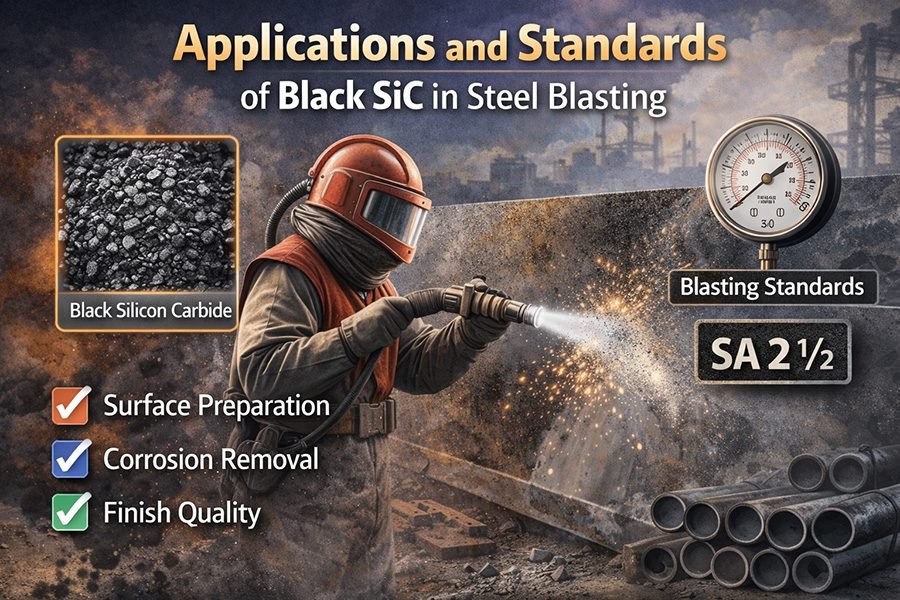
Określa stopień rdzy i stopień przygotowania powierzchni stalowych (NA 1, NA 2, O 2½, NA 3). Czarny SiC jest w stanie osiągnąć Sa 2½ (w pobliżu białego metalu) i Sa 3 (biały metal) wykończenia w zależności od parametrów śrutowania – wymagane przez większość specyfikacji przemysłowych powłok ochronnych.
- SAE J444
Podaje specyfikacje śrutu i ziarna staliwa w Ameryce Północnej. Przede wszystkim do metalicznych materiałów ściernych, Klasyfikacja wielkości cząstek SAE J444 jest często przywoływana jako punkt odniesienia podczas kontroli krzyżowej przy określaniu kątowego ziarna SiC dla porównań równoważnych profili.
- GB/T 2480
Chińska norma krajowa dotycząca wymiarowania ziaren ściernych z korundu i węglika krzemu. Reguluje jakość produkcji krajowej czarnego SiC eksportowanego od chińskich producentów i pod względem praktycznym jest ściśle zgodna z serią FEPA F.
Scenariusze zastosowań i przewodnik wyboru gatunków
Wybór prawidłowego rozmiaru ziarna Black SiC jest najważniejszym czynnikiem w osiągnięciu docelowego profilu powierzchni. Poniższa tabela przedstawia typowe zastosowania obróbki strumieniowo-ściernej stali według zalecanych zakresów ziarna i docelowych stopni czystości:
| Aplikacja | Zalecany żwir | Profil docelowy (Rz) | Stopień czystości | Typowe ciśnienie wybuchu |
|---|---|---|---|---|
| Ciężka stal konstrukcyjna (mosty, na morzu) | F16 – F24 | 75–100 µm | O 2½ / NA 3 | 90–120 psi |
| Rurociąg & zewnętrzna część zbiornika | F24 – F36 | 50–75 µm | O 2½ | 80–110 psi |
| Automobilowy & ramy maszyn | F36 – F60 | 30–55 µm | NA 2 / O 2½ | 70–90 psi |
| Stal nierdzewna & części ze stopów lekkich | F80 – F120 | 15–30 µm | NA 2 / O 2½ | 50–70 psi |
| Precyzyjne komponenty / cienki arkusz | F150 – F220 | 5–15 μm | NA 2 | 40–60 psi |
Czarny SiC vs. Inne materiały ścierne
Zrozumienie, gdzie Black SiC pasuje do szerszego krajobrazu materiałów ściernych, pomaga specjalistom ds. zaopatrzenia w zapewnieniu opłacalności, wybory zgodne ze specyfikacją:
| Ścierny | Twardość (Mohs) | Typ profilu | Zanieczyszczenie żelazem | Indeks kosztów |
|---|---|---|---|---|
| Czarny SiC | 9.1–9,5 | Kątowy / Głęboko | Nic | Średni |
| Stalowy żwir (GL/GH) | 6.0–7,5 | Kątowy | Wysoki | Niski (wielokrotnego użytku) |
| Tlenek glinu (Brązowy) | 8.5–9,0 | Kątowy | Nic | Średnio-wysoki |
| Koraliki szklane | 5.5–6,0 | Bułczasty / Subtelny | Nic | Niski-Średni |
| Granat | 7.5–8,5 | Podkątowy | Nic | Średni |
Czarny SiC zajmuje wyjątkową pozycję: zapewnia kątowość i głębokość żwiru stalowego bez ryzyka zanieczyszczenia żelazem, i tnie bardziej agresywnie niż brązowy tlenek glinu przy porównywalnych rozmiarach cząstek. Do zastosowań, w których liczy się czystość chemiczna — sprzęt ze stali nierdzewnej, powłoki morskie, lub systemy podkładów na bazie cynku — często preferowaną specyfikacją jest czarny SiC.
Często zadawane pytania
Poszukujemy niezawodnego dostawcy Black SiC, który spełnia międzynarodowe standardy obróbki strumieniowo-ściernej?
Henan Superior Aredives (HSA) produkuje materiały ścierne z czarnego węglika krzemu klasy FEPA od F16 do F1200, z pełnym ISO 11126-7 dokumentacja zgodności i raporty z testów stron trzecich dostępne na żądanie. Niezależnie od tego, czy przygotowujesz stal konstrukcyjną pod powłoki o dużej wytrzymałości, piaskowanie zewnętrznych części rurociągów, lub wykańczanie precyzyjnych elementów, nasz zespół techniczny może pomóc w określeniu odpowiedniego rozmiaru ziarna i stopnia czystości dla konkretnego zastosowania. Zaopatrujemy klientów w ponad 60 krajach o stałej jakości partii, elastyczne MOQ, i szybkie terminy realizacji. Skontaktuj się z nami już dziś, aby poprosić o bezpłatną próbkę lub uzyskać indywidualną wycenę swojego projektu.