مع تشديد لوائح الانبعاثات العالمية من اليورو 6 إلى الصين السادس, أصبح مرشح جسيمات الديزل المتواضع أحد أهم المكونات في تصميم المركبات الحديثة. وفي قلبها توجد مادة واحدة تجعل كل ذلك ممكنًا: كربيد السيليكون (SiC) — a ceramic that combines extraordinary heat resistance, المتانة الميكانيكية, وكفاءة الترشيح بطريقة لا يمكن أن تضاهيها أي مادة أخرى.
ما هو مرشح جسيمات الديزل - وما أهمية المواد?
أ Diesel Particulate Filter is an exhaust aftertreatment device engineered to capture and oxidize carbonaceous soot particles produced during diesel combustion. بدون DPF, هذه الجسيمات الدقيقة - كثير منها أدناه 2.5 ميكرون - تدخل الغلاف الجوي وتساهم في أمراض الجهاز التنفسي, الضباب الدخاني, وعدم الامتثال التنظيمي.
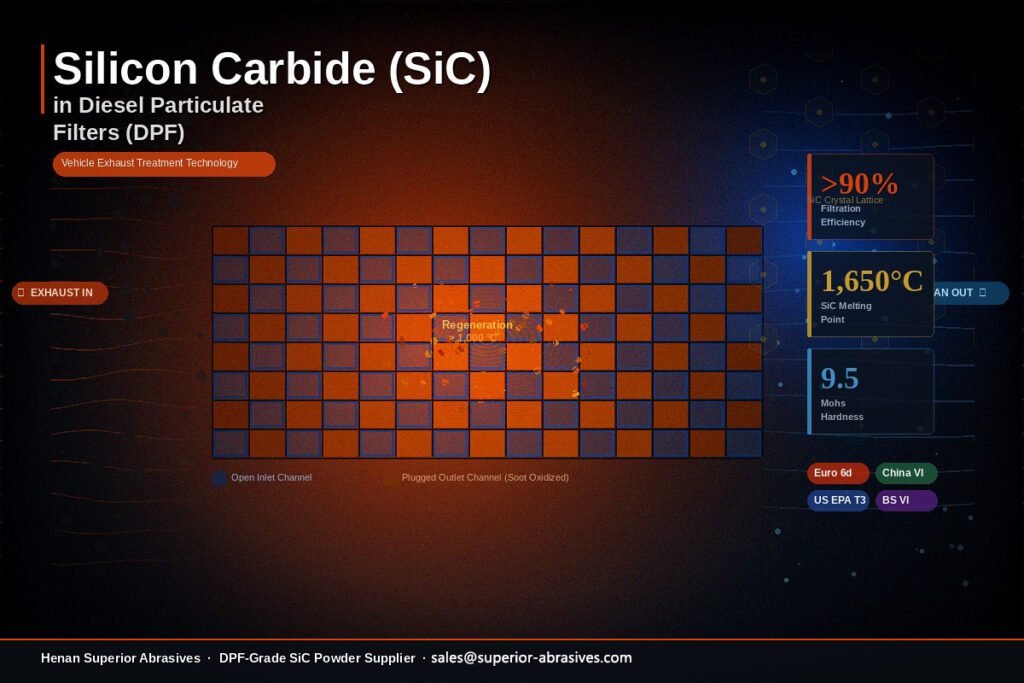
تعمل DPF في بيئة قاسية: يمكن أن تصل درجات حرارة غاز العادم بشكل روتيني إلى 600-900 درجة مئوية, and during active regeneration — the high-temperature burn-off cycle that clears accumulated soot — temperatures inside the filter can spike beyond 1,000°C. The substrate material must not only survive these conditions but maintain dimensional stability, filtration integrity, and low back-pressure cycle after cycle, for the life of the vehicle.
That is exactly why Silicon Carbide emerged — and why it now dominates the market for passenger car and light-duty DPF substrates globally.
The Material Science Behind SiC’s Dominance in DPF
كربيد السيليكون is a covalently bonded compound of silicon and carbon (SiC) that forms a crystalline lattice of exceptional rigidity. Its application in DPF substrates is not incidental — it is the result of its unique convergence of properties that are precisely matched to the demands of exhaust aftertreatment.
الخصائص الحرارية: Surviving the Regeneration Cycle
The regeneration event is the single most thermally demanding moment in DPF operation. Accumulated soot is burned off at temperatures exceeding 550°C, and in uncontrolled regeneration events, localized “thermal runaway” can push temperatures well above 1,000°C. Most cordierite substrates — SiC’s main competitor — begin to soften and deform above 1,200°C.
- Melting point of ~1,650°C: SiC provides a substantial safety margin above the highest regeneration temperatures encountered in service.
- Thermal conductivity of 120–170 W/m·K: SiC dissipates heat rapidly and evenly across the substrate, preventing dangerous hot-spot formation.
- معامل منخفض للتمدد الحراري (4.0 × 10⁻⁶/°C): The substrate expands and contracts predictably without cracking or delaminating over thousands of thermal cycles.
- High specific heat capacity: SiC absorbs and releases heat in a controlled manner, stabilizing temperatures during rapid load changes.
القوة الميكانيكية: Withstanding Road Vibration and Pressure
A DPF mounted beneath a vehicle is subject to constant mechanical vibration, exhaust pressure pulses, and mounting stress. SiC ceramics exhibit a flexural strength of 300–500 MPa, أعلى بكثير من الكورديريت, السماح للمصنعين بإنتاج هياكل قرص العسل ذات الجدران الرقيقة دون التضحية بالسلامة الهيكلية. الجدران الرقيقة تعني انخفاض الضغط الخلفي على المحرك, وهو ما يترجم مباشرة إلى كفاءة استهلاك الوقود وإنتاج الطاقة.
مقاومة كيميائية: النجاة من بيئة العادم
يحتوي عادم الديزل على مركبات الكبريت, الهيدروكربونات, أكاسيد النيتروجين, وبخار الماء، وهو خليط كيميائي عدواني عند درجات حرارة عالية. SiC’s outstanding oxidation resistance stems from a passive SiO₂ passivation layer that forms on the surface, protecting the bulk material from further oxidation. This self-protecting behavior is critical for long service life in the harsh under-hood environment.
Technical Note: The thermal conductivity advantage of SiC over cordierite (roughly 10–15× higher) هذا هو السبب وراء وصول SiC DPFs إلى درجة حرارة التجديد بشكل أسرع وتبريدها بشكل أكثر انتظامًا - وهو عامل رئيسي في تقليل الإجهاد الحراري وإطالة عمر خدمة الركيزة.
كيف يتم تصنيع ركائز SiC DPF
إن إنتاج ركيزة SiC DPF عبارة عن عملية تصنيع سيراميك دقيقة تبدأ بجودة مسحوق SiC الخام. يساعد فهم هذه العملية المشترين والمهندسين على تحديد درجة المادة الصحيحة منذ البداية.
خطوة 1 — اختيار المواد الخام
مسحوق ألفا-سيك عالي النقاء (≥99% محتوى كربيد السيليكا) is selected as the base material. Particle size distribution is tightly controlled — typically D50 values in the 10–50 µm range — since particle size directly affects the porosity, permeability, and wall strength of the finished substrate.
خطوة 2 — Plasticization and Extrusion
SiC powder is blended with organic binders, pore-forming agents, and plasticizers, then extruded through a precision die to form the characteristic honeycomb channel structure. Cell density is typically 200–300 cells per square inch (cpsi) لتطبيقات DPF السيارات.
خطوة 3 - التجفيف والتلبيد
بعد البثق وتوصيل نهاية القناة (يتم توصيل القنوات البديلة لإجبار العادم عبر الجدران المسامية), يتم تجفيف الجسم الأخضر ثم تلبيده عند درجات حرارة تتراوح بين 2000-2200 درجة مئوية في جو متحكم فيه. تعمل هذه الخطوة على تكثيف هيكل SiC, يحرق المجلدات العضوية, ويؤسس هيكل المسام النهائي.
خطوة 4 - طلاء محفز (خياري)
ل SCRF (مرشح التخفيض التحفيزي الانتقائي) التطبيقات, طبقة محفزة تحتوي على معادن مجموعة البلاتين (PGM) أو يتم تطبيق أكاسيد المعادن الأساسية على جدران القناة الداخلية, تحويل غازات NOₓ في وقت واحد مع ترشيح السخام.
SiC مقابل. كورديريت: مقارنة المواد الركيزة DPF
| ملكية | كربيد السيليكون (SiC) | كورديريت |
|---|---|---|
| أقصى درجة حرارة للاستخدام | ~1400 درجة مئوية مستمرة | ~1,200 درجة مئوية (يخفف أعلاه) |
| الموصلية الحرارية | 120-170 واط/م·ك | 1.5-3.0 وات/م·ك |
| معامل التمدد الحراري | 4.0 × 10⁻⁶/°C | 1.0–2.0 × 10⁻⁶/درجة مئوية |
| قوة الانثناء | 300-500 ميجا باسكال | 150-200 ميجا باسكال |
| كثافة | ~3.1 جم/سم3 | ~2.1 جم/سم3 |
| تطبيق DPF الأساسي | سيارات الركاب, الشاحنات الخفيفة | الشاحنات الثقيلة, SCR فقط |
| تجديد التسامح | ممتاز | معتدل |
| التكلفة النسبية | أعلى | أدنى |
المحركات التنظيمية: لماذا يتسارع الطلب على SiC DPF
The shift toward stricter particulate emissions standards worldwide is the single most powerful driver of SiC DPF adoption. Each successive regulation imposes tighter limits on particle number (PN) and particle mass (مساءً), requiring higher-performance substrates.
Key Emissions Standards Requiring DPF Technology
- Euro 6d (أوروبا): Requires PN ≤ 6 × 10¹¹ particles/km for light-duty diesel vehicles — effectively mandating a high-efficiency DPF on every diesel car sold in Europe.
- China VI (الصين): Directly equivalent to Euro 6d; implemented for light-duty vehicles from July 2020, and for heavy-duty vehicles from July 2021.
- US EPA Tier 3 / California LEV III: Stringent PM standards applied to all light-duty vehicles, driving DPF adoption even in gasoline particulate filter (جي بي إف) applications where SiC is gaining share.
- BS VI (الهند): Leapfrogged from BS IV directly to BS VI in 2020, creating a massive overnight demand for DPF-equipped diesel powertrains across one of the world’s largest vehicle markets.
Market Insight: The global DPF market is projected to grow substantially through 2030 as emerging markets implement Euro 6-equivalent standards. SiC substrate demand is directly correlated — SiC DPF procurement cycles typically run 18–36 months from raw material specification to vehicle integration.
Specifying SiC for DPF Applications: What Buyers Must Know
For ceramic substrate manufacturers, catalyst coaters, and tier-1 automotive suppliers sourcing SiC powder for DPF production, material specification is not a commodity decision. المعلمات التالية حاسمة:
النقاء وتكوين المرحلة
يجب أن يكون SiC من فئة DPF مرحلة ألفا (6متعدد الأنواع H أو 4H) مع الحد الأدنى من النقاء 98.5-99.5% كربيد السيليكون. يجب التقليل من محتوى السيليكون الحر لأنه يتأكسد بشكل تفضيلي ويمكن أن يعطل التلبد. يجب التحكم في الحديد والشوائب المعدنية الأخرى لتجنب النشاط التحفيزي الذي يمكن أن يغير سلوك التجديد.
توزيع حجم الجسيمات (PSD)
يتحكم PSD الخاص بمسحوق الإدخال بشكل مباشر في توزيع حجم المسام للركيزة الملبدة, والذي بدوره يحكم كلاً من كفاءة الترشيح وانخفاض الضغط. يجب على الموردين تقديم بيانات D10/D50/D90 الكاملة, ليست مجرد قيمة متوسطة. يتم في بعض الأحيان تحديد التوزيعات الثنائية لتحسين كثافة تعبئة الجسم الأخضر قبل التلبيد.
التشكل والمساحة السطحية
تُفضل جزيئات SiC على شكل صفيحة لتطبيقات DPF لأنها تحتوي على كثافة خضراء أعلى وتنتج أعناقًا ملبدة أقوى مقارنة بالأشكال المتساوية. مساحة سطحية محددة (رهان) تعتبر القيم التي تتراوح من 1 إلى 5 م²/جم نموذجية للمساحيق من فئة DPF.
Batch-to-Batch Consistency
Automotive supply chains demand extraordinary consistency. SiC powder lots must carry full certificates of analysis (CoA) with traceable calibration, and suppliers should be able to demonstrate statistical process control (SPC) data across production batches. A deviation in D90 tail values of even 5–10% can produce unacceptable variation in substrate back-pressure across a production run.
الأسئلة المتداولة
س: Why is Silicon Carbide used in DPF instead of other ceramic materials?
يوفر SiC المزيج الأمثل من التوصيل الحراري, قوة درجات الحرارة العالية, والمقاومة الكيميائية لتطبيقات DPF. إن موصليتها الحرارية - أعلى بحوالي 50-100 مرة من الكوردييريت - تسمح بسرعة أكبر, تجديد أكثر اتساقًا مع تقليل التدرجات الحرارية الخطيرة. لا توجد مادة سيراميك أخرى قابلة للتطبيق من حيث التكلفة تتطابق مع هذا المزيج من الخصائص لحالات استخدام DPF لسيارات الركاب.
س: ما هو الفرق بين alpha-SiC و beta-SiC لمسحوق DPF?
ألفا-سيك (هيكل بلوري سداسي, 6أنواع متعددة H/4H) is the preferred form for DPF substrate manufacturing because it is thermodynamically stable above 2,000°C and sinters to higher density. Beta-SiC (مكعب, 3C polytype) is less stable at sintering temperatures and can undergo a phase transformation during processing, which can introduce microstructural defects. DPF-grade SiC powder specifications typically call for alpha-SiC with a beta-SiC content below 5%.
س: How does DPF regeneration work and how does SiC enable it?
As soot accumulates on the DPF walls, engine back-pressure increases. At a trigger threshold, the engine management system initiates regeneration — either passive (using exhaust heat from high-load operation) أو نشط (injecting post-combustion fuel to raise exhaust temperature). SiC’s high thermal conductivity ensures the entire substrate reaches soot combustion temperature (~550–650°C) quickly and uniformly, preventing localized over-temperature events that can crack or melt inferior substrates.
س: Can SiC DPFs be used for gasoline engines as well?
نعم. Gasoline Particulate Filters (GPFs) for gasoline direct injection (جي دي آي) engines are increasingly required under Euro 6d and China VI regulations. SiC GPFs follow similar design principles to diesel DPFs, though the lower soot loading rates in GDI engines mean thinner walls and lower cell densities are often acceptable. SiC’s thermal stability remains a key advantage in GPF applications, where exhaust temperatures can briefly exceed those encountered in diesel operation.
س: What SiC particle size is used to manufacture DPF substrates?
عادةً ما يستخدم مصنعو ركيزة DPF مساحيق SiC بقيم D50 في حدود 10-50 ميكرومتر للدفعة الرئيسية, غالبًا ما يتم دمجه مع جزء أصغر (D50 من 1-5 ميكرومتر) لملء الفراغات بين الجزيئات في الجسم الأخضر. يبلغ متوسط حجم المسام للركيزة الملبدة الناتجة 10-20 ميكرومتر - وهي كبيرة بما يكفي لمنع انخفاض الضغط الزائد بينما تكون صغيرة بما يكفي لالتقاط جزيئات السخام التي يقل حجمها عن الميكرون بكفاءة.
س: كيف يمكنني تأهيل مورد مسحوق SiC جديد لتصنيع DPF?
يجب أن تتضمن عملية تأهيل الموردين القوية: (1) full chemical analysis with ICP-OES for trace metals, (2) XRD phase analysis confirming alpha-SiC content and beta-SiC quantification, (3) laser diffraction PSD with D10/D50/D90 across a minimum of 10 consecutive production lots, (4) BET surface area and SEM morphology characterization, و (5) a pilot sintering trial comparing substrate porosity, MOR (modulus of rupture), and pore size distribution against your current qualified supplier. Request IATF 16949 certification evidence for automotive-grade supply chains.
Source High-Purity SiC Powder for DPF Manufacturing
خنان متفوقة مزيلات (HSA) supplies FEPA- and ISO-certified Silicon Carbide powder to ceramic substrate manufacturers, catalyst coaters, and automotive tier-1 suppliers worldwide. Our DPF-grade SiC delivers the purity, PSD consistency, and phase control your production requires.
Alpha-SiC ≥99.0%, with full ICP-OES trace metal certification per batch.
SPC-monitored PSD with D10/D50/D90 CoA on every production lot.
Custom particle size ranges from D50 = 1 µm to 50 ميكرومتر; bimodal blends available.
Serving 60+ countries with reliable lead times and dedicated technical support.