Walk into any precision manufacturing facility and you will find abrasive grain doing quiet, essential work. It shapes turbine blades, polishes optical lenses, sharpens cutting tools, and finishes surfaces that other processes simply cannot reach. Yet despite its ubiquity, غالبًا ما يتم اختيار الحبوب الكاشطة عن طريق العادة وليس عن طريق الاختيار المستنير - وهذه العادة تكلف الشركات المصنعة عمرًا طويلاً للأداة, جودة السطح, والإنتاجية.
تلقي هذه المقالة نظرة عملية على ماهية الحبوب الكاشطة, كيف تعمل, وما الذي يميز الحبة المختارة جيدًا عن الحبوب الفقيرة. سواء كنت تحدد عجلة الطحن, حزام جلخ مطلي, أو مركب اللف فضفاضة, سيساعدك فهم الأساسيات على اتخاذ قرارات أفضل في كل مرحلة من مراحل العملية.
ما هي الحبوب الكاشطة?
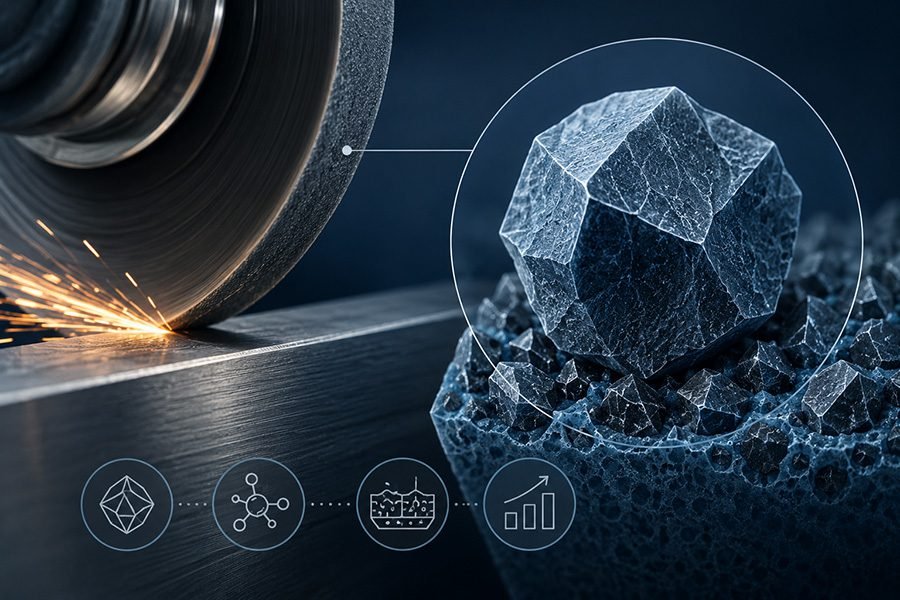
الحبوب الكاشطة تشير إلى الصلبة, angular particles used to cut, طَحن, lap, hone, or polish a workpiece surface. The grain is the active cutting element in virtually every abrasive product — bonded into a wheel, coated onto a belt or disc, or suspended in a slurry.
The key physical characteristics that define an abrasive grain are:
- صلابة — The grain must be harder than the material it is cutting. Hardness is measured on the Mohs scale or, more precisely, by Vickers or Knoop microhardness testing.
- صلابة — A grain that fractures too easily dulls quickly. الشخص الذي يكون شديد الصلابة يظل حادًا ولكنه قد يولد حرارة زائدة. كسور الحبوب المثالية بطريقة مسيطر عليها, تعريض حواف القطع الطازجة.
- هشاشة — Related to toughness, تصف القابلية للتفتيت مدى سهولة شحذ الحبوب ذاتيًا تحت الحمل. يفضل استخدام الحبوب عالية القابلية للتفتيت للطحن الدقيق; الحبوب منخفضة القابلية للتفتيت تناسب إزالة المخزون الثقيل.
- شكل الحبوب — Blocky grains cut aggressively with high stock removal; تنتج الحبوب الشبيهة بالصفائح أو الشظية تشطيبات أكثر دقة.
- توزيع حجم الجسيمات — Tight size control (كما هو محدد من قبل FEPA, أنسي, أو معايير JIS) ensures consistent surface finish and predictable wheel performance.
The Major Types of Abrasive Grain
Modern abrasive grain falls into two broad families: conventional abrasives and superabrasives.
Conventional abrasives include aluminum oxide (الألومينا المنصهرة), كربيد السيليكون, and their variants. They cover the vast majority of industrial grinding, blasting, اللف, وتطبيقات التلميع.
كربيد السيليكون (SiC) is one of the most important conventional abrasive grains. With a Mohs hardness of approximately 9.5 and a Knoop hardness around 2,500kg/mm², it is harder than aluminum oxide and cuts more aggressively. Two primary grades are used industrially:
- كربيد السيليكون الأسود — slightly lower purity (≥98% كربيد), tougher, used for grinding cast iron, المعادن غير الحديدية, ممحاة, حجر, والمواد المقاومة للحرارة.
- كربيد السيليكون الأخضر — higher purity (≥99% كربيد), more friable, preferred for precision grinding of cemented carbides, سيراميك, زجاج, and hard nonferrous alloys.
You can read a detailed comparison in كربيد السيليكون الأسود مقابل. كربيد السيليكون الأخضر.
أكسيد الألمونيوم grains — including brown fused alumina, الألومينا البيضاء المنصهرة, and pink alumina — are tougher but less hard than SiC. They excel on steel and ferrous alloys where their controlled fracture behavior extends wheel life.
مواد كاشطة فائقة — diamond and cubic boron nitride (سي بي ان) — occupy a higher performance tier. Their cost is substantially greater, but in high-volume, tight-tolerance applications the economics often favor them.
How Abrasive Grain Size Is Specified
حجم الحبوب (also called grit size) defines the particle dimensions and directly controls the surface finish a process can achieve. Two major grading systems are in widespread use:
- FEPA F series — used for bonded abrasives (طحن عجلات, شحذ الحجارة). Ranges from F12 (خشن) إلى F1200 (very fine).
- FEPA P series — used for coated abrasives (ورق زجاج, أحزمة جلخ). Ranges from P12 to P2500.
The two systems use different statistical definitions for the same nominal grit number, so F80 and P80 are not interchangeable. فهم the difference between coated abrasives and bonded abrasives is essential before specifying grain size.
كقاعدة عامة:
- فريك خشن (F12–F60) are used for heavy stock removal and rough shaping.
- Medium grits (F80–F220) handle general-purpose grinding and finishing.
- Fine and very fine grits (F240–F1200 and beyond, into micron powder ranges) are used for precision lapping, تلميع, والتشطيب السطحي.
Selecting the Right Abrasive Grain for Your Application
No single grain type outperforms all others in every situation. The selection process should consider:
- مادة الشغل — Hard, مواد هشة (سيراميك, زجاج, carbide) favor the sharp, friable cutting action of green SiC or diamond. Tough steels benefit from aluminum oxide’s controlled fracture.
- Required surface finish — Tighter finish tolerances push you toward finer grains and higher-purity materials with tighter size distributions.
- Process type — Bonded abrasive processes (طحن عجلات) behave differently from coated processes (belts, discs) and free-abrasive processes (اللف, تلميع). The grain’s interaction with the bond system matters as much as the grain itself.
- Thermal sensitivity — SiC conducts heat well, which can benefit temperature-sensitive workpieces. لكن, its reactivity with iron at high temperatures makes it unsuitable for grinding most steels.
- Cost and availability — Conventional grains offer excellent value for most applications. Superabrasives are justified only when the economics — tool life, cycle time, scrap rate — clearly support the premium.
For a structured decision framework, see How to Choose the Right Abrasive.
Grain Quality: What to Look For
Not all abrasive grain sold under the same grade designation is equal. Quality differences exist at every level of the supply chain. When evaluating a supplier or a lot of material, the following parameters matter:
- النقاء الكيميائي — Higher SiC content means fewer soft inclusions that dull cutting edges prematurely.
- Grain shape consistency — A well-controlled process produces grains with consistent angularity. Irregular or overly rounded grains underperform.
- Size distribution tightness — Out-of-spec particles — oversized grains in particular — cause deep scratches and inconsistent finishes.
- Magnetic content — Iron contamination from production equipment must be minimized, especially for electronic, optical, and semiconductor applications.
- Free carbon and silica — Excess free carbon or silica indicates process problems and degrades abrasive performance.
Reputable manufacturers provide certification data for each lot, including sieve analysis, التركيب الكيميائي, and magnetic content. Understanding the properties of silicon carbide abrasives will help you interpret this data correctly.
Abrasive Grain in Bonded vs. Coated Products
The same grain behaves differently depending on how it is held and presented to the workpiece.
في bonded abrasive products (طحن عجلات, segments, honing sticks), grain is locked in a vitrified, راتنجويد, or metal bond matrix. As grains dull, bond fracture releases them and exposes fresh grains — a self-sharpening mechanism. The grain’s toughness and the bond’s strength must be balanced for the wheel to dress properly rather than loading or glazing.
في coated abrasive products (ورق زجاج, أحزمة جلخ, discs), grain is adhered in a single layer to a flexible backing. The grain orientation, coating density (open vs. closed coat), and bond system all influence cut rate and finish. SiC-coated products excel on non-metallic substrates — stone, زجاج, سيراميك, والبلاستيك.
في loose abrasive processes (اللف, تلميع, منشار الأسلاك), الحبوب المعلقة في سائل حامل تقوم بعملية القطع. توزيع حجم الجسيمات ومورفولوجيتها حاسمة بشكل خاص هنا, نظرًا لعدم وجود نظام روابط للتعويض عن تقلب الحبوب.
التعليمات
س 1: ما هو الفرق بين الحبوب الكاشطة ومسحوق الكاشطة?
غالبا ما تستخدم المصطلحات بالتبادل, ولكن من الناحية الفنية “قمح” يشير إلى الجسيمات في نطاق الحصباء الكلي (عادةً F12 – F220 لكل FEPA), بينما “مسحوق” أو “مسحوق دقيق” يشير إلى جزيئات أدق (F230 وأدق, وصولا إلى أحجام دون ميكرون). وتستخدم الحبوب الكبيرة في طحن العجلات والتفجير; تستخدم المساحيق الدقيقة لللف, تلميع, والتشطيب الدقيق.
Q2: هل حبيبات كربيد السيليكون مناسبة لطحن الفولاذ؟?
عمومًا, لا. يتفاعل SiC كيميائيًا مع الحديد عند درجات الحرارة المرتفعة المتولدة أثناء الطحن, مما يسبب تبلد الحبوب السريع. أكسيد الألومنيوم هو الحبوب المفضلة لمعظم تطبيقات طحن الفولاذ. كربيد هو, لكن, تستخدم على نطاق واسع لطحن الحديد الزهر, حيث يعمل الجرافيت الموجود في البنية المجهرية كمواد تشحيم.
س 3: كيف يؤثر حجم الحبوب على تشطيب السطح?
Coarser grains remove material faster but leave a rougher surface. Finer grains produce smoother surfaces but cut more slowly. For a given workpiece material, you typically start with a coarser grit for stock removal, then step through progressively finer grits to reach the required finish.
س 4: What does “القابلية للتفتيت” mean in practical terms?
A friable grain fractures under cutting loads to expose fresh, sharp edges. This is desirable for precision grinding because it keeps cutting forces low and prevents heat buildup. A less friable grain holds its shape longer, which suits aggressive stock removal but can lead to glazing if the grain dulls without fracturing.
س 5: How do I know if I am buying quality abrasive grain?
Request lot-specific test certificates covering sieve analysis (size distribution), التركيب الكيميائي, and magnetic content. Compare these against the relevant FEPA, أنسي, or JIS standard. A reputable supplier should provide this documentation routinely and be able to trace material back to its production batch.
حول مزيلات خنان المتفوقة (HSA)
Henan Superior Abrasives is a China-based manufacturer and exporter of silicon carbide, الألومينا المنصهرة, and boron carbide abrasive materials. Founded with a focus on quality consistency and international standards compliance, HSA supplies macro grits, micro powders, and specialty grades to customers in abrasives manufacturing, الحراريات, سيراميك, إلكترونيات, and metallurgy across more than 30 بلدان.
HSA’s products are produced in compliance with FEPA, أنسي, and JIS standards and are supported by full lot traceability and third-party quality certifications. The company’s technical team can assist with grain selection, size specification, and application troubleshooting.
Learn more at www.silicon-carbides.com or visit the HSA factory page.
Ready to Source High-Quality Abrasive Grain?
If you are evaluating silicon carbide or other abrasive grains for your manufacturing process, HSA offers competitive pricing, consistent quality, and responsive technical support.
Request a quote أو contact our team to discuss your specifications.