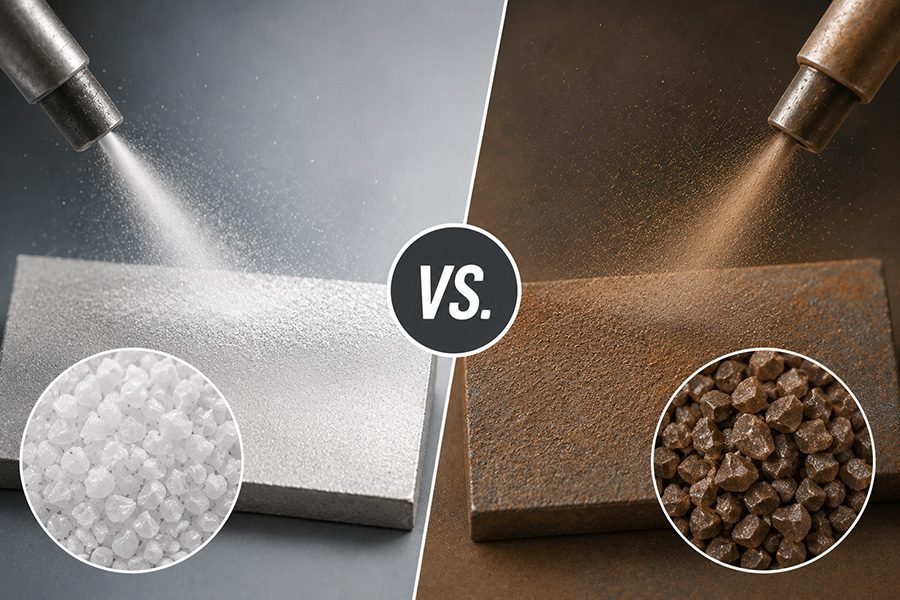
Вказівка неправильного сорту плавленого глинозему для вибухових робіт рідко приносить невдачу відразу — вона не вказується в звіті про перевірку. Плями від заліза на медичному імплантаті, анкерний профіль 15 мікронів дрібніше, ніж специфікація покриття, або кількість повторних циклів, яка згортається після двох проходів, може скасувати роботу, яка коштує набагато більше, ніж сам носій. Вибір між білим плавленим оксидом алюмінію (WFA) і коричневий плавлений оксид алюмінію (BFA) тому це питання відповідності поведінки руйнування, хімія, і економіка до субстрату та подальшого процесу.
Механіка руйнування: Чому WFA ріже різкіше, а BFA служить довше
Білий плавлений оксид алюмінію виробляють із кальцинованого оксиду алюмінію (Al₂O₃ ≥ 99.2%) електроплавлений при температурах вище 2050 ° C, утворюючи майже монокристалічний α-оксид алюмінію з мінімальними домішками гратки. Отримане зерно тверде (Кнопка 2100–2200) але розсипчастий — при ударі ламається по площинах спайності, оголюючи нові ріжучі краї з кожним циклом.
Коричневий плавлений оксид алюмінію, виплавляють з бокситів з вуглецевмісними відновниками, містить 2–4% TiO₂ у твердому розчині. Titania зміцнює решітку, підвищуючи енергію руйнування та утворюючи більш блочне зерно, яке чинить опір розбиванню. Компроміс добре встановлений: BFA забезпечує більше ударів на частинку, тоді як WFA забезпечує більше скорочень за один удар.
Хімія та ризик забруднення
Для підкладок, які будуть зварюватися, анодований, покритий покриттям, або імплантований, Залишки заліза та кремнію з абразиву є типовими причинами відторгнення. Тут два ЗМІ різко розходяться.
| Власність | Білий зрощений глинозем | Коричневий зрощений глинозем |
|---|---|---|
| Вміст Al₂O₃ | 99.2–99,6% | 94.5–96,5% |
| TiO₂ | ≤ 0.05% | 2.0–3,8% |
| Fe₂O₃ | ≤ 0.10% | 0.10–0,30% |
| Твердість по Кнупу (кг/мм²) | 2100–2200 | 1900–2000 |
| Насипна щільність (g/cm³) | 1.75–1,95 | 1.85–2.05 |
| Індекс розсипчастості | Високий | Низький–Середній |
| Колір після вибуху | Білий / нейтральний | Сіро-коричневий осад |
WFA є стандартним для titanium, нержавіюча сталь 316L, алюмінієві аерокосмічні сплави, та ортопедичні компоненти, у яких чорні метали спричиняють порушення пасивації або почервоніння. BFA прийнятний — і часто кращий — для вуглецевої сталі, призначеної для фарбування або епоксидних систем, де незначний відтінок поверхні не має значення, а міцність визначає економічність переробки.
Контроль глибини профілю та шорсткості поверхні
Анкерний профіль (Rz, Ry5) регулює адгезію покриття. Обидва абразиви можуть досягати діапазону 50–125 мкм, типового для SSPC-SP 10 / № НАРОДЖЕННЯ. 2, але досягають вони по-різному. Розсипчаста зернистість WFA дає гостріше, більш кутовий профіль при нижчому тиску сопла; жорсткіший пісок БФА довше зберігає свій розмір і створює дещо круглішу форму, більш щільний профіль.
- Терморозпилювальне покриття (HVOF, плазма): WFA F24–F36 при 5,5–7 бар для різкого, підрізані профілі, які механічно фіксують накладку.
- Надміцна епоксидна смола на конструкційній сталі: BFA F16–F24 для профілю 75–100 мкм із високою швидкістю переробки.
- Попереднє анодування на алюмінії: WFA F60–F100, щоб уникнути забруднення анодної плівки залізом.
- Очищення та видалення плісняви: BFA F46–F80 для ударної стійкості до інструментальної сталі.
- Текстурування медичного імплантату: WFA F100–F220 із суворим контролем Fe та Si.
Вартість за цикл, Не ціна за тонну
У відділі закупівель часто порівнюють ці дві ціни, де BFA зазвичай на 20–35% дешевше. Це порівняння вводить в оману в камері переробки. Ефективна собівартість регулюється переходами до поломки, утворення пилу, і переробка через забруднення.
Пескоструминна робота в камері замкнутого циклу на вуглецевій сталі, BFA зазвичай забезпечує 8–14 корисних циклів, перш ніж опуститися нижче робочої сітки; WFA дає 4–7. Під час відкритого піскоструминного очищення деталей із нержавіючої та кольорової металів, що математика перевертає — одна відмова від чорних металів може стерти рік економії медіа. Для ширшої економічності оксидних і карбідних середовищ під час дробеструйної обробки та притирки, наші нотатки про карбід кремнію для функціональної кераміки показати аналогічну логіку життєвого циклу, застосовану до піску SiC.
Матриця прийняття рішень щодо застосування
Використовуйте наступний робочий процес, якщо підкладка або подальший процес сумніваються. Це відображає логіку, яку застосовують наші інженери, коли відбирають нових клієнтів, і він інтегрується з рішеннями суміжних продуктів, таких як карбід бору для найтвердіших підкладок або спеціальні плавлені мінерали, такі як плавлені алюмінати кальцію для металургійного використання.
- Визначте хімічний склад субстрату. Будь-який титан, нержавіюча, на основі нікелю, алюміній, або біомедичний сплав → за замовчуванням WFA.
- Дайте визначення післявибухового процесу. Анодування, пасивація, PVD, або термальний спрей → WFA. живопис, цинкування, гумова підкладка → допускається BFA.
- Визначте кількісну переробку. Закрита шафа з регенератором → економіка BFA домінує на чорних частинах; WFA все ще є обов’язковим для кольорових металів.
- Встановіть ціль профілю. Гострий Rz з низьким тиском → WFA F-зернистість. Глибокий профіль з високою продуктивністю → зернистість BFA.
- Перевірте за допомогою групи свідків, перш ніж фіксувати тоннаж; вимірювати профіль, вбудовування (SEM/EDS), і чистота (ISO 8502-3).
Для екстремально твердих підкладок, таких як керамічна броня або твердосплавний інструмент, де навіть WFA руйнується занадто швидко, перейдіть до карбіду бору — покупці можуть переглянути регіональні варіанти, в тому числі карбід бору для продажу в Індії для орієнтовних сортів і упаковки.
Контрольний список специфікацій для замовлень на купівлю
Неоднозначні замовлення на замовлення є найпоширенішою основною причиною поставок, що не відповідають специфікаціям. Обґрунтована специфікація для вибухових засобів WFA або BFA повинна фіксувати наступні параметри:
- Позначення зернистості відповідно до FEPA F або P, або ANSI B74.12, з смугою допуску сита.
- Межі хімії: Al₂O₃ мінімум, Fe₂O₃ максимум, Діапазон TiO₂, магнітний вміст (ppm).
- Насипна щільність і коефіцієнт форми зерна (блоковий проти. кутовий).
- Волога ≤ 0.1% і провідність водного екстракту для чутливих покриттів.
- Упаковка — вологозахисні пакети, великі сумки з вкладишами, або герметичні бочки для використання в чистих приміщеннях.
HSA постачає як WFA, так і BFA до FEPA, ВІН, і стандарти ANSI, із сертифікатами випробувань на заводі, що відстежуються до партії в печі. Для нішевих поверхонь, таких як фрикційні покриття, див. нашу примітку SiC для виробників струн для повітряних зміїв, який ілюструє, як розмір зерна та крихкість перетворюються на дуже різні функціональні результати від однієї родини оксидів.
Часті запитання
Q: Чи можу я використовувати коричневий плавлений оксид алюмінію на нержавіючій сталі, якщо потім пасивую?
А: Технічно так, але пасивація після вибуху азотною або лимонною кислотою (ASTM A967) необхідно видалити залишки заліза та титану, додавання вартості та етап контролю якості. для 304/316 та дуплексні сорти, призначені для фармацевтики, харчування, або морська служба, WFA з Fe₂O3 ≤ 0.10% є специфікацією з меншим ризиком.
Q: Який розмір зернистості FEPA дає a 75 мкм анкерного профілю?
А: При тиску на соплі 6,5–7 бар і куті удару 45°, WFA F24 зазвичай забезпечує Rz 70–85 мкм на м’якій сталі; BFA F20–F24 забезпечує порівнянний профіль, але з трохи меншою кількістю піків. Завжди перевіряйте групу свідків, виміряну відповідно до ISO 8503-4 з реплікою стрічки.
Q: Скільки циклів переробки я можу очікувати від кожного носія?
А: У належно обслуговуваній шафі тиску на вуглецевій сталі, BFA становить у середньому 8–14 циклів, перш ніж опуститися нижче робочої сітки; WFA в середньому становить 4–7 циклів через більшу розсипчастість. Додавання циклонічного класифікатора та повітряної промивки розширює обидва, але співвідношення залишається приблизно 2:1 на користь BFA.
Q: Чи білий плавлений оксид алюмінію достатньо провідний, щоб ризикувати на електронних підкладках?
А: WFA сам по собі є електричним ізолятором (питомий об'ємний опір > 10¹² Ом·см ат 20 ° C), але поверхнева волога та дрібний пил можуть проводити. Для друкованих плат або напівпровідникових інструментів, вказувати малопилові класи з вологістю ≤ 0.05% і перевірте провідність водного екстракту нижче 50 мкСм/см.
Q: Яке середовище є кращим для термічної підготовки поверхні?
А: WFA F16–F36 є домінуючим вибором для HVOF і підготовки плазмового зв’язувального покриття, оскільки його гостра, розсипчастий злам створює візерунок анкера підрізаного кріплення, необхідний для замикання сплат, а його низький вміст заліза запобігає гальванічним проблемам на межі покриття–підкладка під час експлуатації.
Про Henan Superior Abrasives (HSA)
Henan Superior Abrasives (HSA) є китайським виробником і глобальним постачальником високоефективних абразивів і передових керамічних матеріалів для промислового застосування по всьому світу.. Наш основний асортимент продукції включає чорний карбід кремнію, зелений карбід кремнію, карбід кремнію електронного класу (SIC), білий плавлений оксид алюмінію, коричневий плавлений оксид алюмінію, карбід бору, плавлені алюмінати кальцію, і СГ абразиви.
Обслуговування клієнтів в 30+ країни, HSA постачає надійні матеріали для абразивів, рефракції, технічна кераміка, напівпровідникові програми, точне полірування, піскоструминна обробка, металургія, і високоякісні будівельні матеріали.
Отримайте цінову пропозицію або безкоштовний зразок
Шукаємо надійного постачальника преміальних абразивних та передових керамічних матеріалів? Зв’яжіться з нашою технічною командою сьогодні — ми відповімо протягом 24 годин і може організувати безкоштовні зразки для кваліфікованих проектів.
- 📧 Електронна пошта: sales@superior-abrasives.com
- 💬 WhatsApp: +86-186-3863-8803