What Is Metallurgical Grade Silicon Carbide?
Metallurgical grade 炭化ケイ素 (SiC) is a synthetic compound produced by reacting quartz sand with petroleum coke (or anthracite coal) 非常に高い温度で (above 2200°C) in a resistance furnace. Unlike abrasive-grade silicon carbide, which is used for grinding and cutting applications, metallurgical grade SiC has relatively lower purity requirements but follows unique standards for SiC content, carbon content, and impurity control—specifically tailored for heavy industries such as steelmaking, 鋳造所, and alloy production.
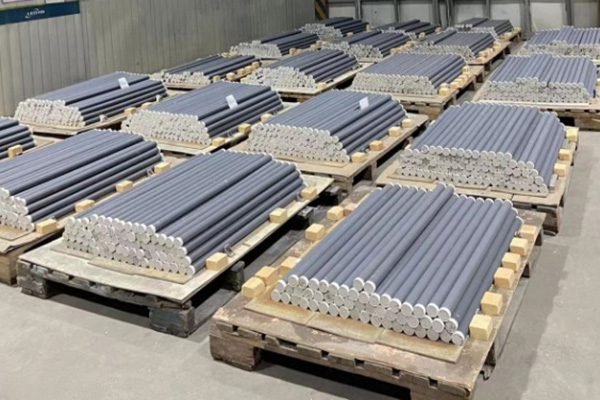
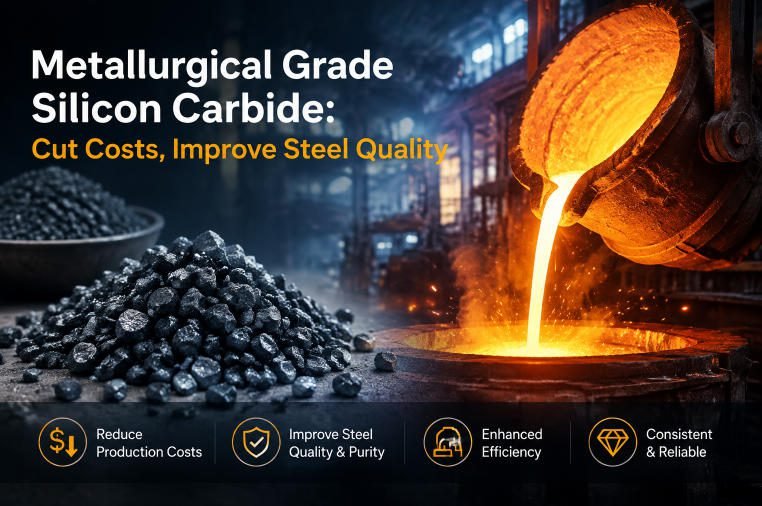
Metallurgical grade silicon carbide typically appears as black or dark gray granules, with SiC content generally ranging from 88% に 97%. Particle sizes range from 0-1mm to 10-100mm and can be customized according to downstream process requirements. Thanks to its excellent high-temperature stability, reducing properties, and exothermic characteristics, it has become an indispensable functional additive in modern metallurgical industries.
Core Applications of Metallurgical Grade Silicon Carbide
1. Deoxidizer and Recarburizer in Steelmaking
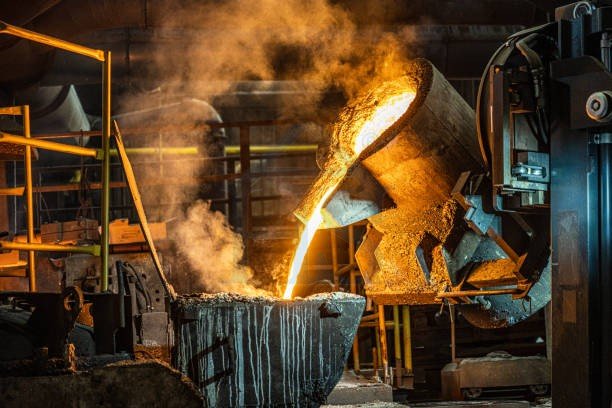
In electric arc furnace (EAF) and converter steelmaking processes, metallurgical grade silicon carbide plays a dual role:
- Deoxidation: SiC decomposes at high temperatures, and the released silicon combines with oxygen in the molten steel to form SiO₂, effectively reducing oxygen content and minimizing internal porosity and inclusions in the finished steel
- Recarburization: The carbon released during decomposition is directly absorbed by the molten steel, enabling precise carbon adjustment to improve steel strength and hardness
- Exothermic Reaction: The decomposition reaction of SiC itself releases heat, helping maintain furnace temperature and reduce power consumption—making it an excellent “furnace charge companion”
Compared to traditional ferrosilicon and coke combinations, silicon carbide can simultaneously accomplish both deoxidation and recarburization, simplifying production procedures and reducing production costs by approximately 8%-15%.
2. Inoculant in Cast Iron Production
In the production of gray cast iron and ductile iron, metallurgical grade silicon carbide is used as an inoculant, offering the following benefits:
- Promotes graphite nucleation and improves graphite morphology distribution
- Enhances mechanical properties and wear resistance of castings
- Reduces the tendency of white iron formation, improving machinability
- Lowers sulfur and oxygen content in molten iron, purifying the melt
3. Refractory Material Production
The excellent high-temperature resistance, 耐熱衝撃性, and thermal conductivity of silicon carbide make it an important raw material for high-end refractory products, widely used in furnace linings, るつぼ, キャスタブル, and other refractory manufacturing.
4. Ferroalloy and Non-Ferrous Metal Smelting
In the production of ferrosilicon-manganese alloys and the refining of certain non-ferrous metals, metallurgical grade silicon carbide is also used as a reducing agent and composition modifier.
Technical Advantages of Metallurgical Grade Silicon Carbide
| 特徴 | Advantage Description |
|---|---|
| High-Purity SiC Content | Available in 88%-97%, meeting various process precision requirements |
| Cost-Effective Efficiency | One-step deoxidation and recarburization, reducing procedures and energy consumption |
| Stable Exothermic Performance | Helps maintain furnace temperature stability, saving electricity costs |
| Reduced Inclusions | Significantly improves the internal quality of steel and castings |
| 環境にやさしい | Compared to some traditional additives, reduces harmful gas emissions |
| Customizable Particle Size | Flexible selection based on different furnace types and processes |
How to Choose a Quality Metallurgical Grade Silicon Carbide Supplier?
When purchasing metallurgical grade silicon carbide, companies should focus on the following key dimensions:
1. Chemical Composition Stability Quality suppliers should provide third-party test reports for each batch, ensuring stable and controllable indicators such as SiC content, フリーカーボン, フリーシリコン, and iron content.
2. Particle Size Uniformity Uneven particle size distribution directly affects melting results and dosing precision. Professional manufacturers should have comprehensive screening and grading processes in place.
3. Production Process and Capacity Manufacturers with their own resistance furnace production lines typically maintain better control over raw material quality and delivery timelines, avoiding markup and supply instability issues caused by intermediaries.
4. Industry Experience and Technical Support Experienced suppliers can provide customized dosing recommendations based on specific customer process requirements (such as electric arc furnaces, medium-frequency furnaces, cupola furnaces, 等), helping customers optimize production costs.
5. Logistics and Delivery Capability A stable supply chain and flexible logistics solutions are crucial factors in ensuring continuous production.
Market Trends and Outlook for Metallurgical Grade Silicon Carbide
As the global steel industry transitions toward green and low-carbon practices, demand for metallurgical grade silicon carbide is showing the following trends:
- Sustained Demand Growth: Infrastructure development in emerging markets is driving increased steel and casting production
- Rising Environmental Standards: Stricter emission standards across countries are boosting demand for clean and efficient additives
- Increasingly Refined Applications: Customer demand for customized particle size and purity specifications continues to grow
- Localized Supply Chains: More buyers are opting for local or regional suppliers with stable production capacity and rapid response capabilities
よくある質問 (よくある質問)
Q1: What’s the difference between metallurgical grade and abrasive grade silicon carbide?
あ: Metallurgical grade silicon carbide is primarily used for deoxidation, recarburization, and inoculation treatment in the steel and foundry industries, with relatively looser SiC purity requirements (88%-97%). Abrasive grade silicon carbide requires higher purity (その上 97%) and specific crystal structures, mainly used for grinding, 切断, および研磨用途.
第2四半期: What are the common specifications for metallurgical grade silicon carbide?
あ: Common particle size specifications include 0-1mm, 1-3んん, 3-8んん, 10-50んん, and 50-100mm, with the specific choice depending on furnace type (electric arc furnace, induction furnace, cupola furnace) and dosing process.
Q3: What are the economic benefits of using silicon carbide instead of traditional ferrosilicon/recarburizers?
あ: Silicon carbide can simultaneously achieve both deoxidation and recarburization functions, reducing the types of additives and feeding frequency. Its exothermic reaction also helps lower power consumption, potentially saving companies 8%-15% in overall smelting costs.
Q4: What should be considered when storing and transporting metallurgical grade silicon carbide?
あ: Silicon carbide has stable properties and no special hazards, but it should be stored in a dry, well-ventilated environment to prevent moisture absorption and caking that could affect performance. For bulk transportation, moisture-proof packaging or container shipping is recommended.
Q5: How do I determine the purchase quantity and dosing ratio?
あ: The specific dosing ratio should be calculated based on comprehensive factors including steel/iron grade requirements, furnace type, and raw material conditions. It’s recommended to consult with the supplier’s technical team and conduct process trials to determine the optimal dosing formula.
Take Action Now: Get Professional Metallurgical Grade Silicon Carbide Solutions
If your company is looking for a stable quality, competitively priced metallurgical grade silicon carbide supplier, don’t let raw material issues become a production bottleneck!
✅ Free access to product technical specifications and test reports
✅ One-on-one process consultation with customized dosing solutions
✅ Flexible minimum order quantities and rapid delivery capability
✅ Priority supply and price protection for long-term partnerships
Contact our technical team today to get your customized quotation and boost your smelting production efficiency while reducing costs!
- Eメール: sales@superior-abrasives.com
- Whatsapp: 0086-18638638803
HSAについて
河南優れた研磨剤 is a comprehensive enterprise specializing in the research, development, 製造, and sales of special non-metallic mineral materials, 炭化ケイ素を含む, 褐色電融アルミナ, and white fused alumina. The company operates multiple automated production lines and a comprehensive quality inspection system, with products widely used across metallurgy, 鋳造所, 耐火材料, and abrasive industries.
With years of deep industry expertise, HSA has established long-term, stable partnerships with numerous steel enterprises and foundries both domestically and internationally. The company upholds a business philosophy centered on “quality first, customer priority,” committed to providing cost-effective raw material solutions and professional technical support services to customers worldwide.
Whether you are a large-scale steel enterprise or a small-to-medium foundry, the HSA team can provide full-process services tailored to your specific process requirements—from product selection and dosing solutions to after-sales technical support.
Choose HSA, choose a stable and reliable metallurgical raw material supply guarantee.