超硬合金 (WC-Co ファミリーの切削工具材料) を間違った研磨材で研削すると、不合格品よりもコストが高くなります. 熱微小亀裂, コバルトバインダーのスミアリング, 砥粒の選択が材料の硬度と靱性の二重性を無視した場合、ホイールグレージングの促進と加速されたホイールグレージングは繰り返し発生する故障モードです。. グリーン炭化ケイ素 (GC) 炭化タングステン複合材料の研削要求に適合する特定の物理的および結晶学的特性により、これらの問題を解決します。. このガイドでは、一致の背後にあるメカニズムと、信頼できる結果を制御するパラメーターについて説明します。.
超硬合金に目的に合った研磨材が必要な理由
超硬合金 (WC-Co) コバルト含有量と炭化物の粒径に応じて、1,400 ~ 1,800 HV に設定されます。. 従来の茶色または白色の溶融アルミナホイール(硬度約 2,000 ~ 2,100 HV)は、WC に対する硬度マージンが不十分で、急速に摩耗します。, 動作を切断するのではなく熱を発生させる. その熱がコバルト結合剤相の変態を促進する, 引張残留応力を導入します, また、工具が機械のスピンドルに到達する前に、表面下の亀裂が核となって工具寿命が 20 ~ 40% 短縮される可能性があります。.
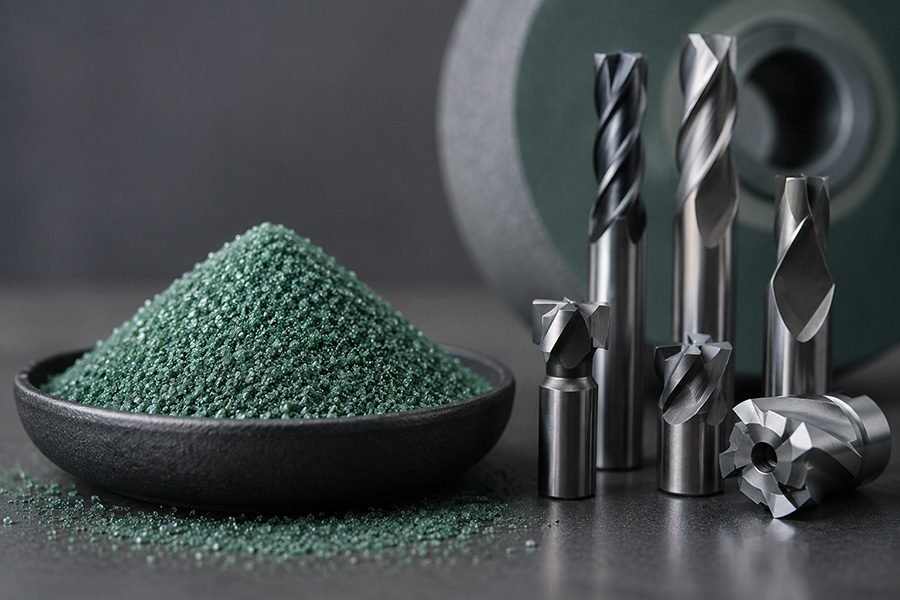
炭化ケイ素, で 2,480 HV ビッカース, ホイールの耐用年数を通じて、WC 粒子よりも優れた純正硬度を維持します。. の 緑色のポリタイプ (6H/4H 結晶構造) 黒の SiC よりも純度が高く、通常は 99.0% 以上の SiC であるのに対し、黒の場合は 98.5% 以下です。不純物負荷が低いため、鮮明な結果が得られます。, より一貫した破断面. この自己研磨破壊挙動が、GC が摩擦ではなく切断を続ける主な理由です.
結晶構造と破壊力学: GC のパフォーマンスの物理的根拠
アチソン炉プロセス中に最高温度のコアゾーンでグリーン SiC が形成される, 条件が化学量論に近い結晶成長とより低い金属不純物の取り込みに有利な場合. その結果、次のようなマテリアルが得られます。 ブロック状の, 半脆性破壊パターン 研削負荷下でも粉砕せずに新鮮な刃先を生成します。. ブラックSiC, 対照的に, よりもろく、小さな破片に砕けます, WC-Coなどの硬く緻密な材料を研削する際のホイール負荷の増加.
この制御された破砕性は靭性指数によって定量化されます。 (の) および破砕指数 (FI) 研磨材の品質仕様に使用される. 通常、GC は TI 45 ~ 55、FI 35 ~ 45 を示します。この値は、黒色 SiC の強力な切断と溶融アルミナの靭性の間に位置します。, 形状保持と表面仕上げが同時に重要となる精密研削に最適です。. 非常に微細な仕上げが必要な用途向け, グリーン炭化ケイ素マイクロパウダー この性能をサブミクロンの表面仕上げ領域に拡張するグレード.
WC-Co 研削作業の粒度の選択
超硬合金研削における砥粒の選択には、研磨速度と表面の完全性のバランスが含まれます。. 砥粒が粗いほど切断速度は速くなりますが、より深い表面損傷層が残り、その後のパスで除去する必要があります。; 砥粒を細かくすると仕上げは向上しますが、それに応じて送り速度を調整しないと単位面積あたりの熱負荷が増加します。.
| 操作の種類 | 推奨粒度範囲 | 対象表面粗さ (ラ) | 注意事項 |
|---|---|---|---|
| 粗削り | 46–60メッシュ | 0.8–1.6μm | より高い冷却液流量; コバルトスミアのモニター |
| 中仕上げ研削 | 80–120メッシュ | 0.4–0.8μm | トランジションパス; ストレス解消に重要な |
| 仕上げる / 成形研削 | 150–240メッシュ | 0.1–0.4μm | ホイール硬度グレード H ~ J を推奨 |
| 精密ラッピング / ホーニング | F400~F1200 (マイクロパウダー) | <0.05 μm | 遊離砥粒または樹脂結合ラッピングフィルム |
ボンドシステムの互換性とホイールの仕様
GC研磨材はビトリファイドに使用されています, レジノイド, メタルボンドホイール構造, それぞれが異なる WC-Co 研削状況に適しています. ビトリファイドボンド 強固な結合構造が形状公差を保持するため、超硬の精密円筒研削および平面研削に有利です。, 効果的なドレッシングを可能にします, 切りくずの負荷を軽減する開放気孔設計をサポートします。. レジノイド結合は振動を吸収し、断続カット形状に適合します. メタルボンドは、長時間の運転で砥石の摩耗を最小限に抑える必要がある複雑な超硬形状のプロファイル研削に適しています。.
ホイールの硬度グレードと構造番号は、研磨剤の種類と同じくらい重要です. コバルト含有量が以下の WC-Co の場合 10 重量%, より難しいグレード (I-K ガラス化) 早期の故障に耐える. 高コバルトグレード (その上 15 重量%) より頑丈で、より柔らかいホイールが必要です (F~H) バインダーの塑性変形によって引き起こされるグレージングがホイールの孔に汚れるのを避けるため. 構造番号 8 ~ 10 (開いた) どちらの場合も熱の蓄積を軽減します.
熱管理: 超硬工具の研削焼けの防止
超硬合金の低い熱伝導率 (20–85 W/m・K (Co 含有量に応じて異なる)) 研削界面に熱を集中させる. コバルトの融点は、 1,495 ℃というと安心感がありますね, しかし、コバルトは、上記の乾燥粉砕または十分に冷却されていない粉砕で達成可能な温度で酸化し、相変化します。 600 °C. その結果、残留引張応力と粒界酸化により、横方向の破断強度が大幅に低下します。.
GC ホイールによる効果的な熱管理には次のことが必要です:
- 水溶性合成冷却剤(最低 10 ~ 15 L/min), コンタクトアークの前方に向けてワークピースを事前に湿らせます
- 結合タイプに合わせたホイール速度 - ビトリファイド GC ホイールの一般的な定格 35 MS; これを超えると、冷却剤の量に関係なくインターフェース温度が上昇します。
- 砥粒を鋭く保つのに十分なドレス頻度; 鈍い GC グリットは切るのではなくこする, を超える効率損失で機械エネルギーを熱に変換する 30%
- 表面温度監視で温度上昇が示された場合、ワークピースの移動速度は低下するのではなく増加します。直感に反しますが、より広い領域に熱を分散させるのに効果的です。
- 測定前に弾性たわみと残留応力を軽減するため、送り込みなしの 2 ~ 3 回のスパークアウト パス
GC vs. 超硬研削用ダイヤモンド砥粒: 実際の比較
ダイヤモンドホイールは、研磨率とホイール寿命の点で最も硬い WC グレードの GC よりも優れています。, しかし、コストの差(通常、ダイヤモンドホイールは同等の GC ホイールの価格の 8 ~ 15 倍)により、多くのショップの経済計算が変わります。. GC は引き続き荒加工パスの実用的な選択肢です, 超硬と HSS の混合ワークロードを扱う工場向け, ホイール在庫の柔軟性が重要な場合. ダイヤモンドホイールには、GC ビトリファイドホイールではできないドレッシングの課題が課せられます。: 回転ダイヤモンドドレッシングは GC の標準であり、特別な工具は必要ありません.
転移点は通常、炭化物の粒径が以下の WC-Co グレードです。 1 μm (サブミクロングレード, 以上の硬さ 1,700 HV) 厳しい公差で加工される. あの交差点で, ダイヤモンド研削の経済性が向上します. 標準 ISO K および P 用途の超硬グレードの公差は ±0.01 mm 以上, グリーン SiC ホイールはコスト競争力を維持 適切に指定されていれば技術的に十分である. GC の品質を定義する純度基準は、半導体グレードの SiC と共通の測定方法論を共有していることは注目に値します。 6N高純度α型炭化ケイ素 — 研磨性と電子 SiC 品質のはしごが結晶化学レベルでどのように接続されるかを示しています.
ブラックSiC, アルミナより硬いながらも, 精密超硬研削用の GC の純度や一貫した破砕性とは一致しません。これは、複数用途の環境向けに購入者が調達する場合に関連する区別です。, 地域の供給プロファイルに示されているように、 タイで販売中の黒色炭化ケイ素 両方のグレードが異なる産業セグメントにサービスを提供する場合.
よくある質問
Q: 超硬砥石に要求されるSiC純度はどのくらいですか?
あ: 結合砥石製造用のグリーン炭化ケイ素は、SiC 純度 99.0% 以上を満たす必要があります。 (FEPAまたはGB/T 2480 標準). 低純度黒色SiC (≤98.5% SiC) より多くの鉄と遊離炭素が含まれているため、硬度の一貫性が低下し、砥粒にソフトスポットが生じます。, WC-Coワークピースの不均一な砥石摩耗の加速.
Q: タングステンカーバイドインサートを研削する際にグリーンSiCホイールをドライで使用できますか?
あ: GC ホイールを使用した WC-Co の乾式研削は、仕上げ加工または中仕上げ加工には推奨されません. インターフェイスの温度は以下を超える可能性があります 600 数秒以内に℃, コバルトの酸化を開始し、抗折力を低下させる残留引張応力. すぐにエアブラストを行う短い粗研削パスは許容可能, ただし、10 ~ 15 L/min の水溶性クーラントが継続的な動作の最小仕様です。.
Q: Ra までの超硬切削工具の仕上げ研削に対応する FEPA 砥粒指定は何ですか 0.2 μm?
あ: Raの達成 0.2 WC-Co 上の µm では通常、研削パスに FEPA F150 ~ F220 GC ホイールが必要です, 必要に応じて、F400 ~ F600 マイクロパウダーを使用したラッピングステップが続く. ホイールボンド硬度グレードJ~K (ガラス化した) 構造番号で 8 従来の円筒研削パラメータの下でのこの表面仕上げ範囲の標準仕様です。.
Q: 超硬グレードのコバルト含有量はホイールの選択にどう影響しますか?
あ: コバルト含有量が高い (その上 15 wt%Co) ワークピースの靭性と延性を向上させます, これにより、ホイールの細孔へのコバルトの汚れが促進され、グレージングの主な原因となります。. これらのグレードの場合, より柔らかい GC ホイール (ガラス化グレードF~H) オープン構造で (9~11番) セルフドレッシング動作を保証するために指定されています. 低コバルトグレード (下 6 wt%Co) より脆くてホイールを傷つけやすい; より難しいグレード (I-K) より緊密な構造で (7–9) 保存期間が長くなります.
Q: 超硬研削盤のビトリファイドグリーン SiC ホイールの一般的なホイール速度はどれくらいですか??
あ: 超硬研削用の標準ビトリファイド GC ホイールの最大動作速度は 35 MS (ホイールの直径に応じて約 3,500 ~ 4,500 RPM), ISO用 525 および ANSI B7.1 マーキング要件. 定格 45 ~ 50 m/s の高速ビトリファイド バージョンも利用可能ですが、ホイール本体の補強とそれに応じた定格の機械保護が必要です. 表示された速度を超えて運転することは安全違反であり、ホイールのバースト速度認定マージンが無効になります。.
河南高級研磨材について (HSA)
河南優れた研磨剤 (HSA) は、中国に本拠を置き、世界中の産業用途向けの高性能研磨材および先端セラミック材料を提供する世界的なサプライヤーです。. 当社の主力製品には黒色炭化ケイ素が含まれます, グリーン炭化ケイ素, 電子グレードの炭化ケイ素 (SiC), 白色溶融アルミナ, 褐色電融アルミナ, 炭化ホウ素, 溶融アルミン酸カルシウム, SG研磨材.
顧客にサービスを提供する 30+ 国, HSA は信頼性の高い研磨材材料を供給します, 耐火物, テクニカルセラミックス, 半導体応用, 精密研磨, サンドブラスト, 冶金, および高機能建材.
見積もりまたは無料サンプルを入手する
高品質の研磨材および先進的なセラミック材料の信頼できるサプライヤーを探しています? 今すぐ当社の技術チームにご連絡ください - 以内に返答させていただきます 24 適格なプロジェクト向けに無料サンプルを手配できます.
- 📧 Eメール: sales@superior-abrasives.com
- 💬 WhatsApp: +86-186-3863-8803